
Natural History
Bullfrogs naturally inhabit ponds, marshes, lakes, slow-moving streams, and wetlands with abundant vegetation. They spend much of their time partially submerged while waiting to ambush prey, and are frequently seen basking on logs, rocks, or the bank during daylight hours.
Bullfrogs are generally solitary and become territorial as adults.
Housing
Larger enclosures are always better.
One adult bullfrog: 40-gallon breeder aquarium (minimum). Larger enclosures (55–75 gallons or larger) provide a much better quality of life. Multiple bullfrogs require substantially more space because territorial aggression and cannibalism are common. A semi-aquatic enclosure works best.
Approximately 60–70% water, 30–40% land. The water should allow swimming while the land area provides resting and basking opportunities.
Provide:
- Driftwood
- Cork bark
- Flat rocks
- Large branches
- Floating platforms
- Dense live or artificial plants
- Multiple hiding places both in and out of the water
- Visual barriers to help reduce stress
Suitable terrestrial substrates include: coconut fiber, organic topsoil (fertilizer-free), cypress mulch, sphagnum moss in humid hiding areas, and leaf litter. The aquatic section should have either a bare bottom or a thin layer of washed play sand if desired.
Avoid: gravel, pebbles, cedar, pine, walnut shell, corn cob, sharp rocks. These materials may cause injury or intestinal blockage if swallowed.
Water Quality
Water quality is one of the most important aspects of bullfrog health.
Always use dechlorinated tap water or spring water. Never use distilled water because it lacks essential minerals.
Ideal water parameters:
- Temperature: 72–78°F (22–26°C)
- Ammonia: 0 ppm
- Nitrite: 0 ppm
- Nitrate: less than 20–40 ppm
- pH: 6.8–7.8
A properly sized biological filter is strongly recommended. Without filtration, perform 30–50% water changes several times each week. With filtration, test water weekly and change approximately 20–30% of the water weekly. Remove uneaten food and feces daily.
Temperature
Maintain a temperature gradient. Air temperature: 75–82°F. Basking area: 82–85°F. Water temperature: 72–78°F. Avoid prolonged temperatures above 86°F.
Use low-wattage overhead basking bulbs if supplemental heat is needed — not ceramic heat emitters. A CHE provides heat with no light cue and can dry out the enclosure, which is a real risk for a species with highly permeable skin. If room temperature reliably stays within range, supplemental heat may not be necessary at all.
Avoid hot rocks.
Lighting
Bullfrogs bask during the day but hunt and vocalize more actively around dusk and after dark. Current evidence suggests they benefit from low-level UVB exposure even though they aren't a primarily diurnal species.
- Low-output UVB bulb (2.5–5%)
- 10–12 hours of light daily
- Replace UVB bulbs every 6–12 months according to manufacturer recommendations
A natural day-night cycle helps maintain normal behavior.
Humidity
Maintain humidity between 60–80%. The land area should remain moist but not waterlogged. Daily misting may be necessary depending on your home's humidity.
Feeding
Bullfrogs are carnivores. They are ambush predators that swallow prey whole. For juveniles, feed every other day. Adults should be fed 2-3 times weekly.
Offer a varied diet including:
Staple Foods
Earthworms
Nightcrawlers
Dubia roaches
Crickets
Black soldier fly larvae (Calciworms)
Silkworms
Occasional Foods
Hornworms
Mealworms
Superworms
Waxworms
Freshwater shrimp
Crayfish
Rare Treats
Pinkie mice
Appropriately sized feeder fish (avoid frequent goldfish due to parasite risk and poor nutritional profile)
Never feed insects collected outdoors because they may contain pesticides or parasites. Avoid feeding prey larger than the width of your frog's head. Feeding with long forceps is safest.
Supplements
In addition to a balanced diet, feeding your bullfrog appropriate supplements can keep them healthy.
Juveniles
- Calcium without vitamin D3: every feeding
- Calcium with vitamin D3: once weekly
- Multivitamin: every 2 weeks
Adults
- Calcium without vitamin D3: 1–2 feedings weekly
- Calcium with vitamin D3: every 2–4 weeks
- Multivitamin: every 2 weeks
Handling
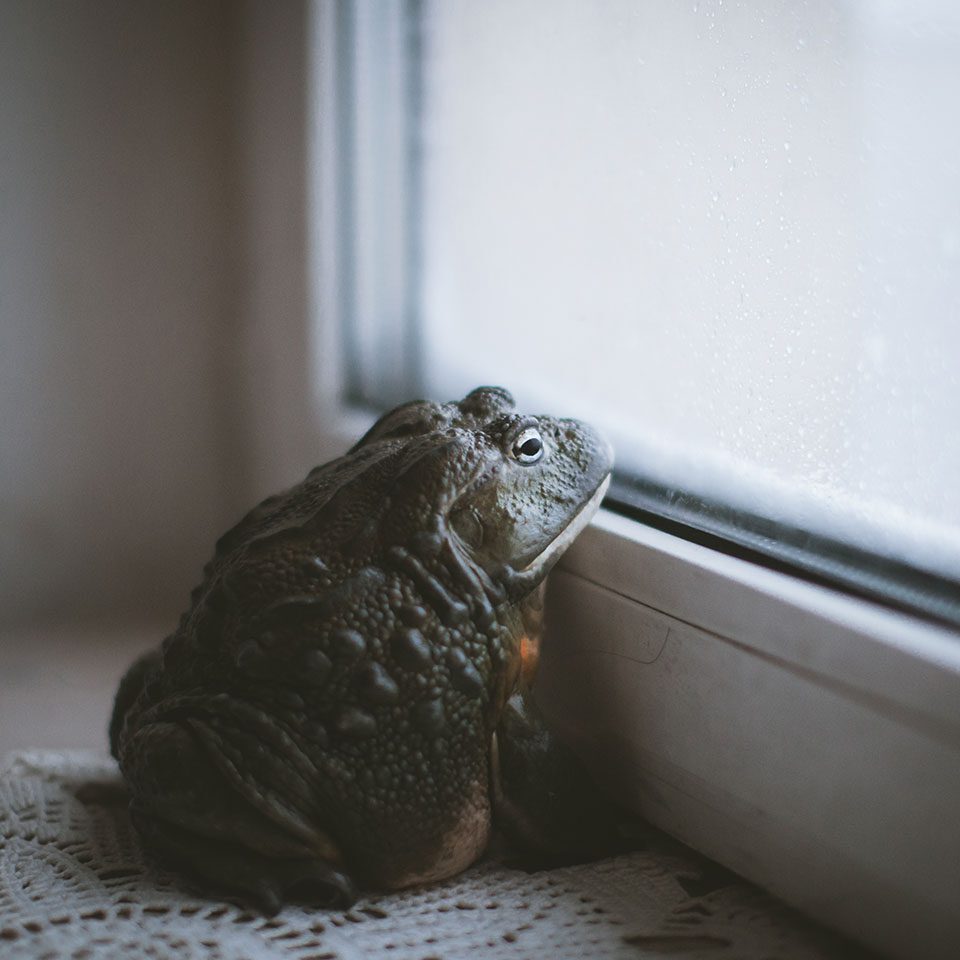
Bullfrogs should be handled only when necessary. Their skin is extremely delicate and absorbs chemicals easily.
If handling is necessary:
- Wash hands thoroughly and rinse well
- Wet your hands with dechlorinated water before touching your frog
- Even better, wear powder-free nitrile gloves moistened with dechlorinated water
- Always support the body and hind legs. Never squeeze the abdomen.
Cleaning and Disinfection
Proper hygiene of your bullfrog’s enclosure is vital to their health and well-being.
- Spot clean feces
- Remove uneaten food
- Rinse food and water dishes
- Remove dead plant material
Perform a complete enclosure cleaning. Recommended method:
- Remove your bullfrog to a temporary enclosure.
- Wash the enclosure and furnishings thoroughly with hot soapy water.
- Rinse everything extremely well with clean water until all soap residue is removed.
- Whenever possible, place the enclosure and decorations outside in direct sunlight for approximately 30 minutes. Natural sunlight provides UV exposure that helps reduce many infectious organisms while avoiding harsh chemical residues.
- Allow everything to cool before returning your frog.
Avoid using strong disinfectants unless directed by your veterinarian, as amphibians are highly sensitive to chemical residues.
Quarantine
Any newly acquired amphibian should be quarantined for 60–90 days before being housed near other amphibians. This helps prevent the spread of diseases such as Chytrid fungus, Ranavirus, and internal parasites. Never share equipment between quarantine and established enclosures without cleaning and disinfecting it first.
Common Medical Problems
Many diseases are related to poor husbandry. Common conditions include:
- Red Leg Syndrome
- Chytridiomycosis
- Ranavirus
- Internal parasites
- Gastrointestinal obstruction
- Metabolic Bone Disease
- Skin abrasions
- Obesity
Contact your veterinarian promptly if you notice:
- Loss of appetite lasting more than 48 hours
- Weight loss
- Redness of the legs or abdomen
- Skin ulcers
- Difficulty swimming
- Abnormal floating
- Swelling
- Regurgitation
- Persistent diarrhea
- Difficulty shedding
- Lumps or masses
Annual wellness examinations and fecal parasite testing are recommended.
Enrichment
Bullfrogs benefit from environmental enrichment. Provide:
- Live or artificial aquatic plants
- Floating logs
- Cork bark
- Multiple hiding places
- Areas with different water depths
- Opportunities to climb onto logs and bask
- Occasional rearrangement of enclosure furnishings
These encourage natural behaviors and reduce stress.
Salmonella
Like all amphibians, bullfrogs can carry Salmonella bacteria without appearing sick. To reduce the risk:
- Wash your hands thoroughly after handling your frog or cleaning the enclosure
- Do not clean amphibian equipment in kitchen sinks
- Supervise young children carefully
- Individuals with weakened immune systems should avoid handling amphibians
Handling
Seek veterinary care immediately if your bullfrog:
- Stops eating for more than 48 hours
- Develops red skin or open sores
- Becomes weak or unable to jump
- Has swelling of the abdomen
- Regurgitates repeatedly
- Floats abnormally
- Has persistent diarrhea
- Has unexplained weight loss
- Develops lumps or skin abnormalities
Early treatment often leads to better outcomes.
Is a Bullfrog Right for You?
Bullfrogs are hardy pets when their environmental needs are met. Proper water quality, appropriate temperatures, UVB lighting, excellent nutrition, and meticulous sanitation are the foundations of long-term health. With regular veterinary care and good husbandry, many captive bullfrogs live well over a decade and remain active, fascinating companions for years to come.