Housing
Guinea pigs need a large enclosure with plenty of room for exercise. In general, the larger the habitat, the happier the guinea pig.
Choose an enclosure that is well ventilated with a solid, easy-to-clean floor. Glass aquariums and cages with solid plastic walls may look neat, but they are poorly ventilated and can increase the risk of respiratory disease. Wire mesh flooring is not appropriate because it can cause painful sores on the feet.
Line the bottom of the cage with newspaper or paper towels. Place shredded paper, recycled paper bedding such as Carefresh, or fleece on top for bedding. Bedding must be kept clean to avoid ammonia buildup from urine. Depending on the number of guinea pigs, cage size, and how quickly bedding becomes soiled, bedding usually needs to be changed every 3 to 7 days.
Do not use wood shavings, as they can harbor mites and contribute to itchy skin. Never use cedar chips. They are especially harmful to the lungs and respiratory system.
Cage location matters. Guinea pigs can panic when frightened, so place the enclosure in a quiet area away from constant noise, heavy traffic, and excitement. Ideal temperature is 65 to 70 degrees Fahrenheit with 40 to 70 percent humidity. Guinea pigs do best with about 12 hours of light and 12 hours of darkness daily.
Clean the entire cage at least once weekly. If you can smell urine, it is time to clean sooner. For routine cleaning, wash the enclosure with mild antibacterial soap and rinse thoroughly with hot water.
When you are trying to prevent illness, you need to disinfect. To disinfect, rinse the enclosure with a diluted bleach solution of one capful bleach to one gallon of water, then rinse again thoroughly with hot water and allow it to dry completely before putting your guinea pig back inside.
Social Requirements
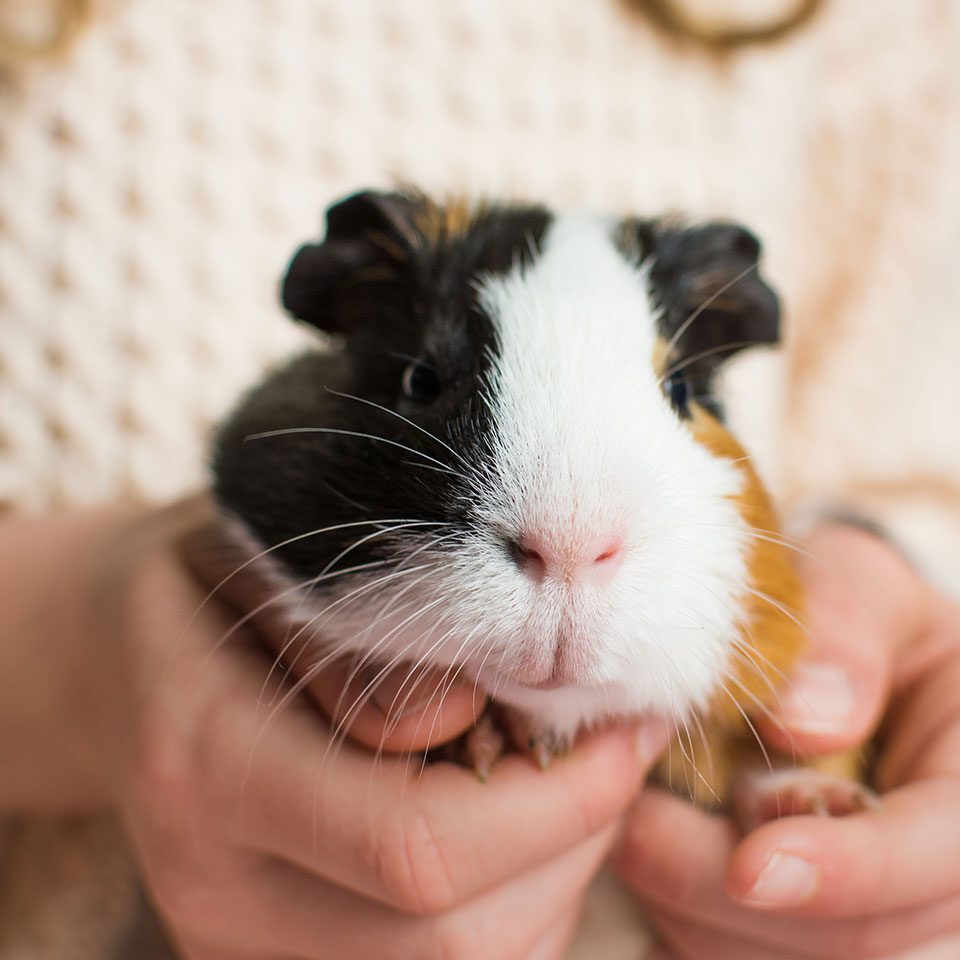
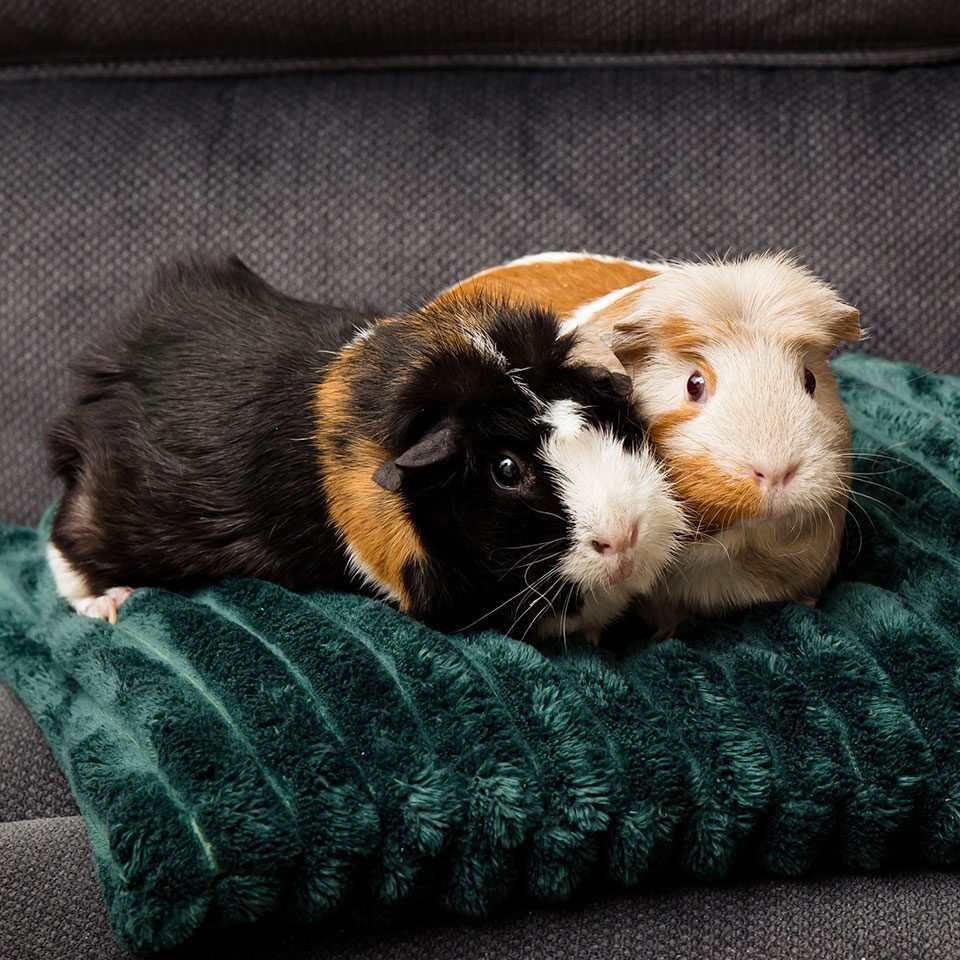
You will provide companionship, but guinea pigs are extremely social animals, and it is strongly recommended to keep at least two together. In some European countries it is illegal to keep a guinea pig alone.
Most guinea pigs do well together after a proper introduction, though housing two males can be more challenging than housing females. Patience and adequate space are key. Guinea pigs of the opposite sex should not be housed together unless one or both are spayed or neutered.
Enrichment
Guinea pigs need a secure place to hide inside the cage. Provide a plastic hide house or box where your guinea pig can sleep and retreat when stressed. If you have multiple guinea pigs, provide at least one hide house per guinea pig.
Offer safe toys for chewing and exploration. Cardboard tubes, paper towel rolls, and wooden chew toys are good options. Untreated fruit tree branches such as apple can also be offered. Rotate toys regularly to prevent boredom.
Handling Your Guinea Pig
Spend time every day quietly sitting near the cage so your guinea pig becomes comfortable with your presence. When handling, approach slowly and from the front.
To lift, support the entire body. Place one hand under the chest and the other under the rear end, then hold your guinea pig against your body so they feel secure. Daily lap time is excellent for bonding and helps guinea pigs become calmer with handling. Offering a favorite leafy green while they sit with you can keep them relaxed and happy.
Diet
Guinea pigs require a vegetarian diet and depend heavily on fiber for gut and dental health.
Guinea pigs should have unlimited access to dry, clean timothy hay or orchard grass. Offer a fresh handful daily per guinea pig.
Offer a handful of fresh leafy greens daily. It is best to offer a mix of at least three different greens. Good choices include dandelion greens, parsley, red and green leaf lettuce, field greens, cilantro, and carrot tops.
Other vegetables that are excellent choices include green, red, and orange bell peppers, cucumbers, and small amounts of carrot.
Vegetables that should be fed sparingly include kale, collard greens, spinach, broccoli, cabbage, and cauliflower.
Offer a small daily amount of timothy-hay-based guinea pig pellets. A typical amount is about one tablespoon per day.
Do not offer unlimited pellets. Too many pellets can contribute to obesity and dental problems because it reduces hay intake. Oxbow Animal Health and Sherwood Animal Health make high-quality guinea pig pellets.
Avoid alfalfa hay and alfalfa-based pellets for most adult guinea pigs. Alfalfa is high in calcium and calories and too low in fiber. Excess calcium can contribute to bladder and urethral stones. In young, growing, underweight, or pregnant guinea pigs, your veterinarian may recommend alfalfa for a limited period.
Contact the hospital if you notice:
- Decreased appetite
- Eye discharge or squinting
- Fur loss
- Dry or flaky skin
- Loose stools
- Difficulty breathing
- Any trauma or injury
We do not recommend dried fruits, nuts or seeds, yogurt drops, or other sugary, starchy treats. Fresh fruit such as a small piece of strawberry or apple can be offered sparingly, but too much can cause digestive upset.
Fresh water should be available at all times using a heavy ceramic bowl or a water bottle. Change water daily and clean bowls or bottles routinely.
Guinea pigs cannot produce their own vitamin C, so it must be provided in the diet. Without enough vitamin C, guinea pigs can develop scurvy. Signs include bleeding gums, inflamed joints, loose teeth, and heart disease.
A juvenile guinea pig needs about 15 mg of vitamin C daily and an adult needs approximately 50 mg daily. We recommend supplementing vitamin C even if your guinea pig pellets are fortified.
The best natural source is bell pepper. Feeding approximately one half of a green or red pepper daily can provide the needed vitamin C.
If your pig will not eat bell peppers, we recommend offering a 50 mg vitamin C supplement daily. Oxbow Animal Health and Sherwood Animal Health make chewable vitamin C wafers for guinea pigs. You can also break up a human chewable 500 mg vitamin C tablet and give 1/8 to 1/10 of a tablet daily. Many guinea pigs will take this as a treat.
We do not recommend adding vitamin C to drinking water. Vitamin C breaks down quickly in light, and there is no reliable way to know how much your guinea pig actually receives.
Exercise
Guinea pigs need daily exercise. Allow at least 30 minutes of supervised time outside the cage in a safe, contained area.
Remove access to electrical cords and anything that can be chewed or swallowed. Guinea pigs love to bite cords, and this can cause severe injury.
Spay and Neuter
Spaying and neutering can prevent or reduce certain health and behavior problems. Neutering males may reduce aggression.
Females commonly develop ovarian cysts if left intact and may show signs of heat. We recommend discussing the benefits and risks of spaying or neutering with your veterinarian.
Breeding
Breeding is not recommended for pet guinea pigs.
Female guinea pigs must be bred for the first time before six months of age or before they reach one pound. The pelvis fuses around six months of age. If a female is bred after pelvic fusion, she may be unable to deliver and may require a cesarean section. The mortality rate for pregnant female guinea pigs is very high and pregnancy should be avoided.
Gestation is 60 to 70 days. Females who can pass the babies typically do not need assistance. Babies are born fully furred with eyes open, and they can eat solid food right away. They will nurse for two to three weeks while also eating solid food.
Females can go into heat within 30 minutes of giving birth. Separate the male before the female delivers. Separate babies by sex before eight weeks of age to prevent breeding. Females can be sexually mature by two months and males by three months.
Heat Stroke
Guinea pigs are susceptible to heat stroke. Weather that feels comfortable to people may be too hot for guinea pigs.
When temperatures rise into the upper 70s and above, provide cooling options such as frozen water bottles placed in the cage or bowls of ice cubes.
Air conditioning is the most effective way to keep the room safe. Fans can help but should not blow directly on the cage. On very hot days, moving the enclosure to a cooler area such as a basement may be necessary.
If you suspect heat stroke, wrap your guinea pig in a cool, damp towel and call us immediately.
Signs include:
- Rapid breathing
- Bright red ears
- Lethargy or lying on the side
- Thick or stringy saliva
- Diarrhea
Heat stroke is a medical emergency and can quickly be fatal.
Signs of Illness
Contact us if you notice:
- Runny eyes or nose
- Sneezing or heavy breathing
- Diarrhea or a bloated abdomen
- Loss of appetite
- Lameness or signs of pain
- Decreased activity
- Difficulty prehending food, dropping food, or drooling
- Misshapen feces that are smaller, soft and cow-pie-like, or fewer than normal
- Scratching frequently
- Hair loss
- Straining to urinate
- Passing blood in the urine or stool
Hair loss and itchiness are especially important signs in guinea pigs. Causes may include mites, lice, or ringworm. Ringworm is a fungal infection that can spread to people and other pets. Hair loss can also be a sign of ovarian cysts. If your guinea pig is itchy or losing hair, schedule an appointment.
Call right away if your guinea pig stops eating or stops producing a normal amount of fecal pellets. This can indicate gastrointestinal stasis and can become life-threatening quickly. If your guinea pig misses a normal meal or eating routine, call us.
Preventive Care
We strongly recommend an annual wellness visit for guinea pigs. Guinea pigs are very good at hiding signs of illness, and routine exams help identify problems earlier when treatment is more likely to be successful. This is a core principle of AAHA-style preventive medicine.
An annual fecal examination is also recommended. This test uses a stool sample to screen for intestinal parasites and other digestive concerns.