Habitat
Adult axolotls typically reach 9 to 10 inches in length. The minimum recommended tank size for one adult axolotl is 29 gallons (approximately 30 × 12 × 18 inches). Larger enclosures are always preferable. Axolotls use floor space more than height, so low, wide tanks are better than tall, narrow aquariums.
The water level should be kept a few inches below the tank rim to prevent escape. Because juveniles grow quickly, it is best to start with an adult-sized enclosure rather than upgrading later.
Axolotls are not social animals and do not require a companion, but they may be housed together in the same enclosure if space, water quality, and size compatibility are appropriate.
Provide smooth hides and caves to allow your axolotl to feel secure. Rough or sharp surfaces can cause skin injuries. Bare-bottom tanks are strongly recommended, with the exception of hides, moss balls, and large smooth rocks or décor.
Take care to ensure that all decorations or substrate items are larger than the axolotl's head. Axolotls will ingest anything that fits into their mouth, often accidentally while feeding. This is especially dangerous for juveniles and can lead to intestinal obstruction.
Water Maintenance
Axolotls produce large amounts of waste, making water quality critical. Aquariums must be fully cycled with beneficial bacteria before an axolotl is introduced, a process that typically takes at least four weeks when done correctly.
Beneficial bacteria convert toxic ammonia into nitrite and then into less harmful nitrate. Proper filtration with low water flow is essential, as axolotls are stressed by strong currents. Adjustable filters with customizable media are ideal.
Ammonia should be 0 ppm. Nitrite should be 0 ppm. Nitrate should be maintained between 5 and 20 ppm and will never be zero in a mature aquarium.
Live, low-light plants such as moss balls or pothos roots may help reduce nitrate levels.
Always use a water conditioner when adding or changing water. Avoid products containing iodine or aloe, as these can be toxic to axolotls. Seachem Prime is a safe and commonly recommended option.
Regular water testing is essential. Test kits such as the API Freshwater Aquarium Master Kit allow monitoring of ammonia, nitrite, nitrate, and pH.
The acceptable pH range is 6.5 to 8.0, with an optimal pH of 7.4 to 7.6.
Never use medications or water additives intended for fish without veterinary guidance. Many products that are safe for fish are dangerous or fatal to axolotls.
Temperature and Lighting
Axolotls are cold-water amphibians and do not require a heater. Ideal water temperature is 60 to 68°F. Temperatures above 70°F can lead to stress, immune suppression, and disease.
Fans or aquarium chillers may be necessary in warmer environments. Always use an aquarium thermometer to monitor temperature consistency.
Axolotls are sensitive to bright light. Aquarium lighting is not required and should be minimal if plants are used.
Diet
Axolotls thrive on a protein-rich, varied diet. Appropriate foods include nightcrawlers and earthworms, ghost shrimp and cherry shrimp, daphnia and blackworms for juveniles, axolotl-specific pellets, Repashy Grub Pie, and frozen bloodworms as an occasional treat.
Adult axolotls should be fed two to three times per week. Uneaten food must be removed promptly to maintain water quality.
Live feeder fish such as goldfish or minnows are not recommended. These fish may nip at axolotls and damage their gills or protective slime coat, and they can introduce parasites or disease.
Health Problems
Axolotls possess remarkable regenerative abilities, but this does not protect them from disease. Most medical issues arise from poor husbandry, especially inadequate water quality. Axolotls are extremely sensitive to environmental changes, making consistent care and routine testing essential.
Never use fish medications without veterinary approval. Some are lethal to axolotls.
Common health problems seen in axolotls include bacterial or fungal infections, neoplasia (cancer), parasites, physical injury, and foreign bodies. Even though axolotls can regenerate tissue, injuries should be evaluated promptly.
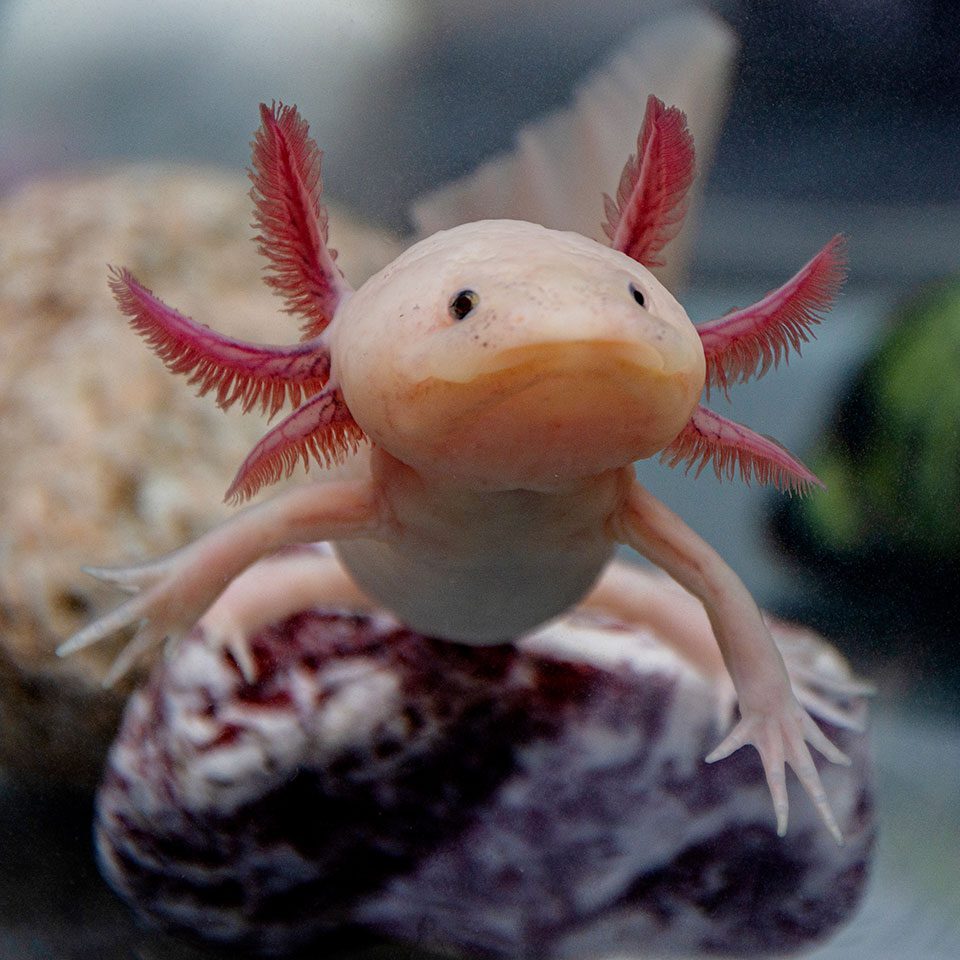
Observe your axolotl closely to learn what is normal for them. Axolotls may fire up or fire down, showing temporary changes in coloration such as brighter gills during activity. This is normal.
Contact your veterinarian if you notice loss or deterioration of gills, curled gills or tail, loss of appetite, erratic swimming, frequent floating, scratching at gills, lethargy, or changes in behavior.
If you have any concerns about your axolotl, please contact the hospital to schedule an appointment. Early intervention significantly improves outcomes.