
Behavior and Social Needs
Chinchillas are primarily nocturnal but may also be active during the day. They are extremely fast, agile, and playful, and they are capable of jumping up to five feet.
Chinchillas may be quite social and many enjoy living with a companion, often forming strong bonds. However, some chinchillas are best housed individually due to aggression. Aggression is often related to inadequate cage size, lack of secure hiding spaces, or significant size differences between chinchillas.
When introducing chinchillas, introductions should be done slowly, under close supervision, and ideally in neutral territory. Unless breeding is intended, same-sex pairs are recommended.
It is always safest to have chinchillas sexed by a veterinarian before introducing them to one another. Male chinchillas do not have a scrotum, as the testes remain primarily within the abdominal cavity. Males can be distinguished from females by the distance between the urethra and anus, which is approximately twice as long in males.
If a female chinchilla is not bred at a young age, her pelvis may fuse, making future births difficult or impossible. Females have a long gestation period of approximately 111 days and typically give birth to one to two young, though up to four may occur. Kits are born fully furred, with open eyes, and ready to explore.
Handling Tips
Chinchillas are very active and agile animals and need to feel safe when handled.
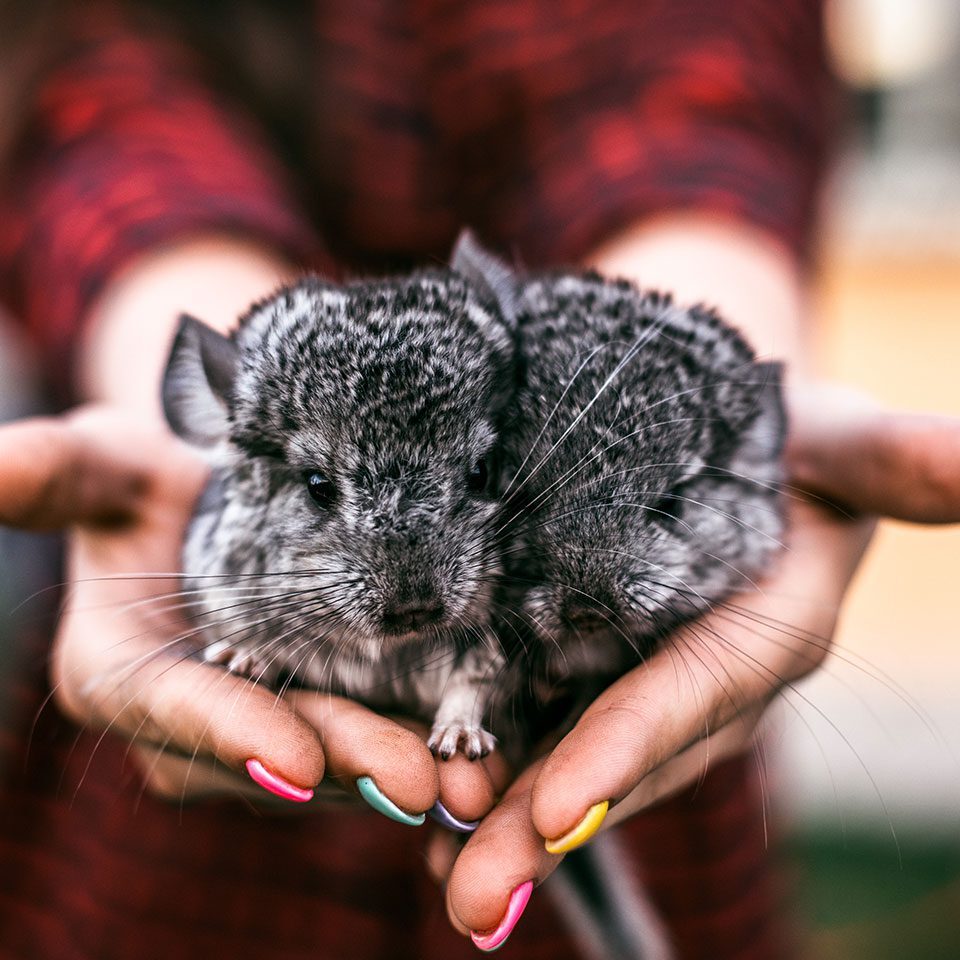
When handling a chinchilla, always use two hands. Support the body with one hand underneath and gently hold the chinchilla close to your body with the other hand. Never allow a chinchilla to leap from your hands, as falls can result in serious injury.
Children should not be allowed to handle chinchillas without strict adult supervision.
Diet and Nutrition
A chinchilla's diet consists primarily of hay and a limited amount of pelleted food. The pelleted diet should not contain seeds or nuts, as these are fattening fillers with little nutritional value.
High-quality pellets formulated specifically for chinchillas are recommended. Offer approximately one ounce of pellets per chinchilla daily. We recommend Oxbow Chinchilla Deluxe pellets.
Heavy ceramic food bowls are ideal because they are chew-proof, difficult to tip over, and easy to clean.
Fresh timothy hay should be available at all times. Avoid legume hays such as alfalfa, which are higher in calories and lower in fiber. Choose hay that smells fresh, appears green, and is free of dust, mold, insects, or moisture.
Hay and pellets should be replaced daily. Remove any food that becomes wet or contaminated with feces, as mold can develop quickly and is dangerous to chinchillas.
Treats may be offered sparingly to strengthen the human–animal bond. Treats should not exceed one teaspoon per day and may include dried fruits, small pieces of carrot, leafy greens, or baked timothy-hay-based treats. Sugary treats may cause bloating or diarrhea. If any digestive upset occurs, do not offer that treat again.
Growing and pregnant chinchillas should always have pellets available.
Fresh water must be available at all times in a ceramic bowl or water bottle. Change water daily.
Pregnant or breeding chinchillas should receive 30 to 60 mg of vitamin E daily.
Housing and Environment
Chinchillas require a large enclosure with multiple levels, platforms, and ledges for jumping and exercise. The Midwest Critter Nation cage is a good option. Wooden ledges designed for chinchillas can be attached to wire cages.
Chinchillas should never be housed on wire flooring. Wire floors can cause painful pressure sores on the feet and increase the risk of limb fractures if legs become trapped. A solid metal floor is ideal.
Appropriate bedding options include Carefresh, aspen shavings, or fleece liners. Cedar shavings should never be used due to toxic aromatic phenols.
Chinchillas are very active and often enjoy running wheels. Wheels must be at least 15 inches in diameter and solid, with no spokes or crossbars, to prevent injury.
Cages should be kept out of direct sunlight and away from drafts. Ideal room temperature is 60 to 70 degrees Fahrenheit with humidity around 40 percent. Temperatures above 80 degrees Fahrenheit can lead to fatal heat stroke.
Chinchillas prefer enclosed sleeping areas. A hide box should always be provided.
Cages should be cleaned at least once weekly, or more often if needed.
Dust Baths and Enrichment
Chinchillas have very dense fur. Dust baths, along with appropriate humidity around 40 percent, help prevent matting and skin issues.
Chinchillas should have access to a dust bath three times per week for 15 to 20 minutes. Never bathe a chinchilla in water. Dust bathing should be done outside of the cage in a well-ventilated area.
Commercial dust bath containers are available. The dust should be at least two inches deep. Blue Cloud chinchilla dust or a mixture of nine parts silver sand to one part Fuller's earth may be used. Replace dust weekly.
Provide enrichment through safe toys such as cardboard tubes, untreated wooden chew toys, and durable rope or wood toys designed for parrots. Rotate toys regularly to prevent boredom.
Common Health Issues in Chinchillas
Chinchillas are highly sensitive to heat due to their dense fur. Environmental temperatures that feel comfortable to people may be dangerous for chinchillas.
Cooling options include frozen water bottles placed in the cage, air conditioning, or moving the enclosure to a cooler area such as a basement. Fans should never blow directly on the cage.
Signs of heat stroke include rapid breathing, bright red ears, lethargy, thick or stringy saliva, diarrhea, and collapse.
If heat stroke is suspected, wrap the chinchilla in a cool, damp towel and seek veterinary care immediately. Heat stroke is a medical emergency and can be fatal.
Chinchilla teeth grow continuously throughout life. Safe wood chew toys should always be available. Suitable woods include aspen, apple, bamboo, pear, willow, manzanita, hazelnut, and poplar.
Dental disease can be severe and may restrict tongue movement, prevent eating, and cause chronic pain. Management may require frequent filing or extractions.
Signs include drooling, wet or matted fur around the mouth or forepaws, difficulty eating, loss of appetite, dropping food, and eye problems. Prompt veterinary care is recommended if any of these signs are observed.
The most important preventive measure is limiting pellet intake so that sufficient hay consumption occurs to naturally wear down the teeth.
Fur ring is a serious and potentially life-threatening condition affecting male chinchillas. Shed fur can become trapped around the penis and cause constriction.
Males that groom excessively, strain to urinate, or pass very small amounts of urine should be examined immediately for a fur ring.
Common health conditions seen in chinchillas include:
- Dermatophytosis (ringworm)
- Trauma such as fractures or wounds
- Diarrhea or constipation
- Respiratory disease
- Eye irritation or conjunctivitis
- Convulsions, encephalitis, or lead poisoning
- Dental disease and malocclusion
- Penile fur rings in males
- Fur barbering due to stress
- Heat stroke
- Gastric stasis
- Cardiomyopathy
- Diabetes mellitus
Contact the hospital if you notice:
- Decreased appetite
- Eye discharge or squinting
- Fur loss
- Dry or flaky skin
- Loose stools
- Difficulty breathing
- Any trauma or injury
Preventive Care
A new pet examination is recommended when a chinchilla is first brought into the home. Annual wellness exams are strongly encouraged. Fecal testing is also recommended to make sure your chinchilla is free and clear of intestinal parasites.
Chinchillas are very good at hiding illness, and problems are often advanced by the time signs appear. Routine veterinary exams allow early detection when treatment is more likely to be successful.