
Species Overview
Learn the differences between gerbils and hamsters.
Gerbils
- Most pet gerbils are Mongolian gerbils
- Native to arid desert regions of Mongolia and northeastern China
- Social, active, curious, and typically gentle
- Live in complex underground burrow systems in the wild
- Can sometimes live in same-sex pairs if raised together, but fighting may still occur
- Never house males and females together
- Average lifespan: 3–4 years
Hamsters
- Five species commonly kept as pets: Syrian (golden) hamster; four dwarf hamster species
- Syrian hamsters must be housed alone
- Dwarf hamsters may fight and should be monitored closely
- Hamsters are nocturnal and may bite if startled while sleeping
- Average lifespan: 2–4 years, most live closer to 3 years
Housing: Space Matters
A proper enclosure and habitat setup will keep your tiny pet safe and secure. Keep the enclosure at room temperature, away from drafts, heat sources, or direct sunlight.
Minimum enclosure size should be
- At least 4 feet long × 2 feet wide
- Larger enclosures are strongly preferred
Aquariums or smooth-sided enclosures are ideal because they
- Prevent climbing injuries
- Allow deep bedding for burrowing
- Reduce escape risk
- Contain bedding and sand more effectively than wire cages
A secure screen or mesh lid is required for ventilation and safety.
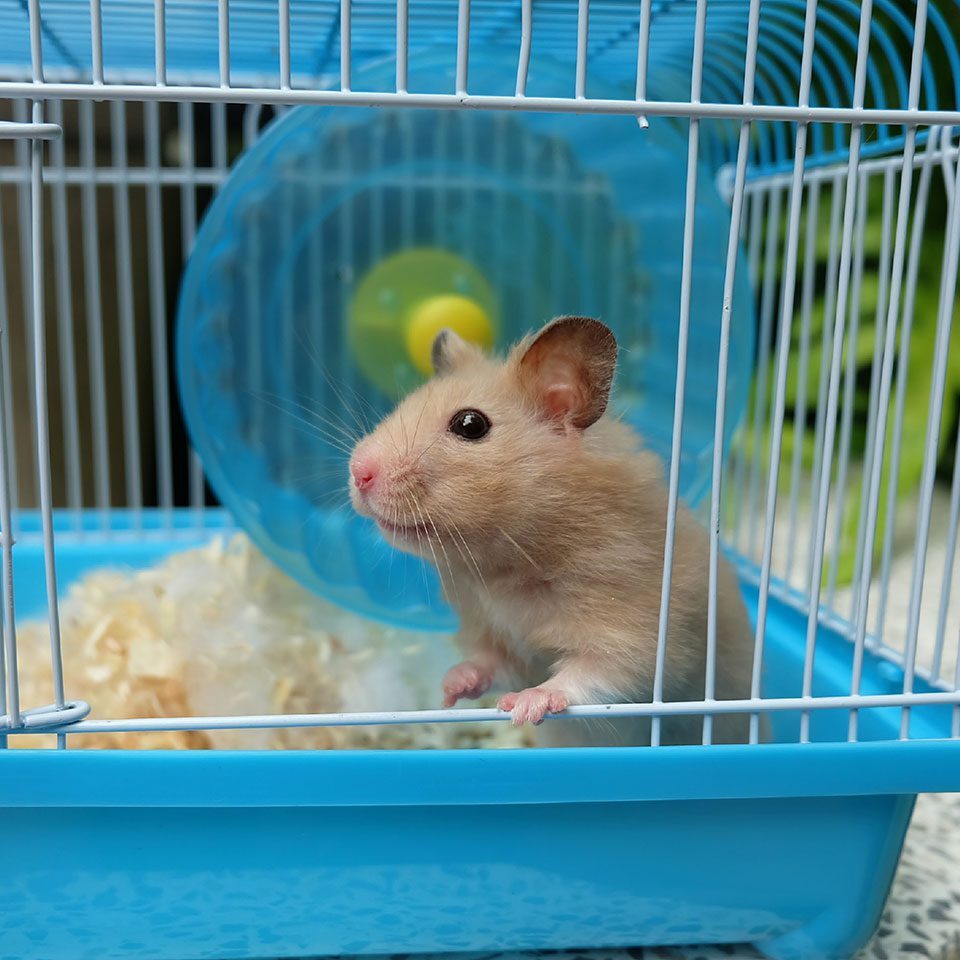
⚠ Wire cages are discouraged. Feet, limbs, and heads can become trapped, leading to fractures or strangulation.
Substrate & Enrichment (Critical for Mental Health)
Hamsters and gerbils are natural diggers and tunnelers. Enrichment is not optional—it is essential.
Substrate
Use multiple substrate types layered together:
- Paper-based bedding (Carefresh or similar)
- Aspen shavings
- Timothy hay or meadow hay
- Shredded paper or toilet paper for nesting
- Avoid: pine or cedar shavings (respiratory toxins); scented bedding.
- Provide at least 6–10 inches of diggable substrate where possible.
Sand Box
- Provide a play sand bath (not dust)
- Use children's play sand or reptile sand labeled safe
- Place in a shallow dish or tray
- Supports natural grooming and digging behavior
Enrichment Items
- Exercise wheel (solid surface, size-appropriate)
- Tunnels and cork logs
- Wooden chew toys (untreated, unpainted)
- Cardboard tubes and hide boxes: use paper towel and toilet paper tubes
- Platforms and low climbing areas
- Regular rearrangement of items to prevent boredom
Rodents' teeth grow continuously—chewing is medically necessary.
Cleaning & Environment
A clean home is important for maintaining the health of your hamster or gerbil.
- Spot clean daily
- Full enclosure cleaning weekly
- Use mild soap and water
- Disinfect weekly with 1 part bleach to 10 parts water
- Rinse thoroughly and dry completely
Diet
A proper diet with balanced nutrition will help keep your pet healthy and avoid dental problems.
Staple Diet
- High-quality pelleted hamster or gerbil diet
- Avoid seed-only diets (selective feeding causes malnutrition)
Hay
- Timothy hay or grass hay available at all times
- Encourages foraging and nesting
Fresh Foods (Daily or Every Other Day)
- Safe options: collards, kale, broccoli stems, beets, leafy greens.
- Remove uneaten fresh food daily.
Treats (Very Limited)
- Small amounts of fruit (banana, strawberry)
- Timothy-hay-based treats preferred
- Avoid yogurt drops, sugary foods, dried fruit, and high-fat seeds
Water
- Fresh water available at all times
- Water bottles preferred over bowls
- Clean bottles 3 times weekly to prevent bacterial growth
Handling & Behavior
Learn how to correctly handle your hamster or gerbil, and to identify abnormal behaviors.
- Handle gently and close to the ground
- Never pick up a gerbil by the tail
- Hamsters may nip if startled—wake gently
- Adult supervision required for children
- Cages should not be accessible to unsupervised children
- Food hoarding and eating feces (coprophagia) are normal behaviors.
Common Medical Issues
These small rodents can suffer from a variety of ailments.
- Hair loss or skin lesions (mites, infection, allergies)
- Bite wounds from fighting
- Diarrhea (“wet tail” is an emergency)
- Overgrown incisors
- Tapeworms in hamsters (zoonotic)
- Epilepsy in gerbils (often stress-triggered)
Signs of Illness – Seek Veterinary Care
Small mammals decline very quickly—early care matters.
- Rapid or labored breathing
- Diarrhea lasting more than 24 hours
- Lethargy or weight loss
- Difficulty eating or dropping food
- Hair loss, itching, wounds
- Swelling or foul odor
- Seizures or twitching
Preventive Care
Despite their small size, hamsters and gerbils still require routine veterinary care.
- Annual veterinary wellness exams
- Twice yearly fecal exam for parasites
- Prompt evaluation of behavior or appetite changes
Is a Hamster or Gerbil Right for You?
A large, enriched enclosure with opportunities to dig, climb, chew, forage, and explore dramatically improves both physical and mental health in hamsters and gerbils. Bigger habitats and better enrichment lead to healthier, calmer, longer-lived pets.