
Species Overview
Boa Constrictors
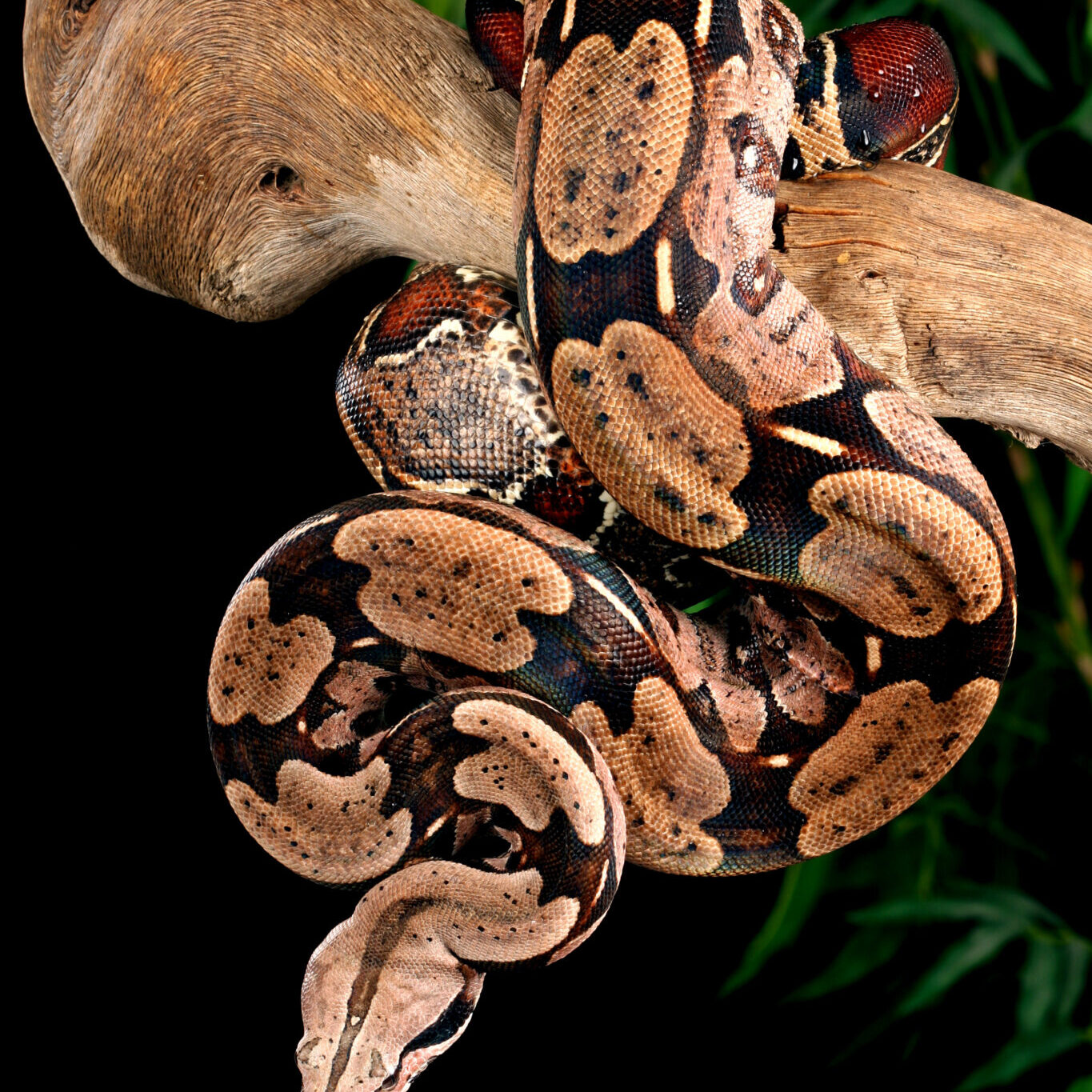
Boa constrictors, often called "common boas," are non-venomous snakes native to Central and South America and some Caribbean islands. Adult size varies by subspecies, but large individuals may reach 13–14 feet. In captivity, boas commonly live 20–30 years.
Young boas may climb trees and shrubs, but most adults become primarily terrestrial as they gain size and weight. Boas often use their tails to grasp objects.
It is strongly recommended to purchase boas from experienced, reputable breeders. Wild-caught boas frequently have parasites and chronic health issues and do not adapt well to captivity. Captive-bred boas are healthier and available in many color and pattern variations.
Pythons
There are many species of pythons, but the ball python is the most commonly kept pet species due to its manageable size and generally calm temperament. Ball pythons are non-venomous constrictors native to sub-Saharan Africa.
Adult females are typically larger than males, averaging 4–4.5 feet in length. Some pythons have lived up to 40 years in captivity. Ball pythons are primarily ground-dwelling and prefer tight hiding spaces such as burrows.
Housing
Large snakes require secure, spacious enclosures that allow normal movement and thermoregulation.
As a general guideline:
- A 10-foot snake should have an enclosure approximately 5' x 5' or 6' x 4'
- A 12-foot snake should have an enclosure approximately 8' x 4'
- Boas benefit from vertical height (4–5 feet) due to climbing behavior
Acceptable enclosure types include:
- Glass terrariums
- Plastic or PVC cages
- Rack systems
- Custom-built enclosures
Snakes require hiding spaces to feel secure and reduce stress.
- Provide at least two hides — one on the warm side, one on the cool side
- Hides should be snug, enclosed, and only open at the entrance
Acceptable hides include:
- Plastic containers
- Cardboard boxes
- Half-logs
Several substrates may be used, each with advantages and disadvantages:
- Newspaper: inexpensive and easy to replace, but not visually appealing
- Aspen shavings: visually appealing but dusty and harder to clean
- Cypress mulch: helps maintain humidity but requires frequent cleaning
- Carefresh or recycled paper bedding: mold-resistant but more expensive
- Dri-Dek rubber mats: easy to clean and resistant to bacteria but costly
Never use pine or cedar shavings, as the aromatic oils can cause serious respiratory irritation. If a particulate substrate is used, it is advisable to feed your snake in a separate enclosure to prevent accidental ingestion of bedding.
Water
- Provide fresh drinking water at all times
- Use a bowl large enough for soaking
- Clean and refill the bowl at least twice weekly
Temperature
Snakes rely on external heat sources to regulate body temperature. Provide a temperature gradient:
- Cool side: 70–75°F
- Warm/basking area: 82–92°F
These temperatures should be maintained, and your snake should be able to move from one side to the other to thermoregulate.
Heat sources may include:
- Overhead heat lamps (incandescent or infrared bulbs)
- Under-tank heating pads attached to the outside bottom of the enclosure
Do not use hot rocks. Ball pythons and other snakes frequently sustain serious burns from these devices.
Temperatures should be:
- Controlled with a thermostat
- Monitored with two thermometers — one placed on the warm end and one on the cool end, about one inch above the substrate
Lighting
Boas and pythons do not require intense lighting but do benefit from a normal day–night cycle. The recommendation is 12 hours of light and 12 hours of dark.
Ball pythons are nocturnal, but it is recommended to provide a 5.0 ReptiSun UVB bulb during daylight hours. While snakes absorb calcium from whole prey, UVB and UVA lighting may provide additional health benefits and promote natural behaviors.
Use a timer to maintain consistent lighting cycles.
You can learn more about UVB Lighting here.
Humidity
Humidity supports hydration and proper shedding.
- Boa constrictors: approximately 60% humidity
- Ball pythons: 50–60% humidity
Humidity may be increased by lightly misting the enclosure substrate twice daily and providing a water container large enough for soaking.
A healthy, well-hydrated snake should shed in one or two long pieces. Incomplete sheds may require veterinary assistance. If your snake is not shedding properly, it could be the humidity or care you are providing.
Feeding
Large snakes eat whole prey items.
Feeding Schedule
Juveniles: every 5–7 days
Adults: every 7–10 days
Prey size should be no wider than the widest part of the snake's body.
Prey Options
Mice and rats
Hamsters or gerbils
Guinea pigs or rabbits (for very large snakes)
Frozen-thawed feeding
Frozen-thawed prey is strongly recommended:
- Freezing kills parasites
- Safer than live prey, which can injure snakes
- Convenient for storage
If frozen-thawed prey is refused, freshly killed prey may be used as a compromise. Frozen prey should be used within six months of freezing.
Feeding in a separate enclosure helps prevent accidental strikes during routine handling.
Quarantine
Quarantining new snakes is critical, especially in multi-snake households.
- Minimum quarantine period: 90 days
- Monitor appetite, fecal output, and behavior
- Schedule a veterinary exam at the start and end of quarantine
Handling
New snakes should be allowed 5–7 days to acclimate before handling. After feeding, avoid handling for 24–48 hours to allow proper digestion. Do not handle snakes during shedding.
Cleaning and Sanitation
Proper hygiene of your bullfrog’s enclosure is vital to their health and well-being.
- Remove feces, shed skin and debris promptly
- Rinse food and water dishes
- Cleaning can be done with hot soapy water and rinsing well
- Use dilute bleach solution (1 capful of bleach to 1 gallon of water)
- Remove all organic material before disinfecting
- Leave bleach solution on surfaces for 10 minutes
- Rinse thoroughly and dry completely before returning the snake
Common Medical Problems
Respiratory disease is common in captive snakes. Watch for:
- Difficulty breathing
- Wheezing
- Discharge from mouth, nose, or eyes
- Regurgitation or vomiting
- Skin lesions
- Refusal to eat at normal feeding times
Common contributing factors include improper temperatures, excessive feeding, and handling too soon after meals. If any of these signs occur, seek veterinary care promptly.
Preventative Care
To support long-term health:
- Check enclosure temperatures daily
- Maintain cleanliness
- Ensure enclosure security
- Keep feeding records (prey size, acceptance or refusal)
Annual veterinary wellness exams are strongly recommended for all large snakes.