Handling
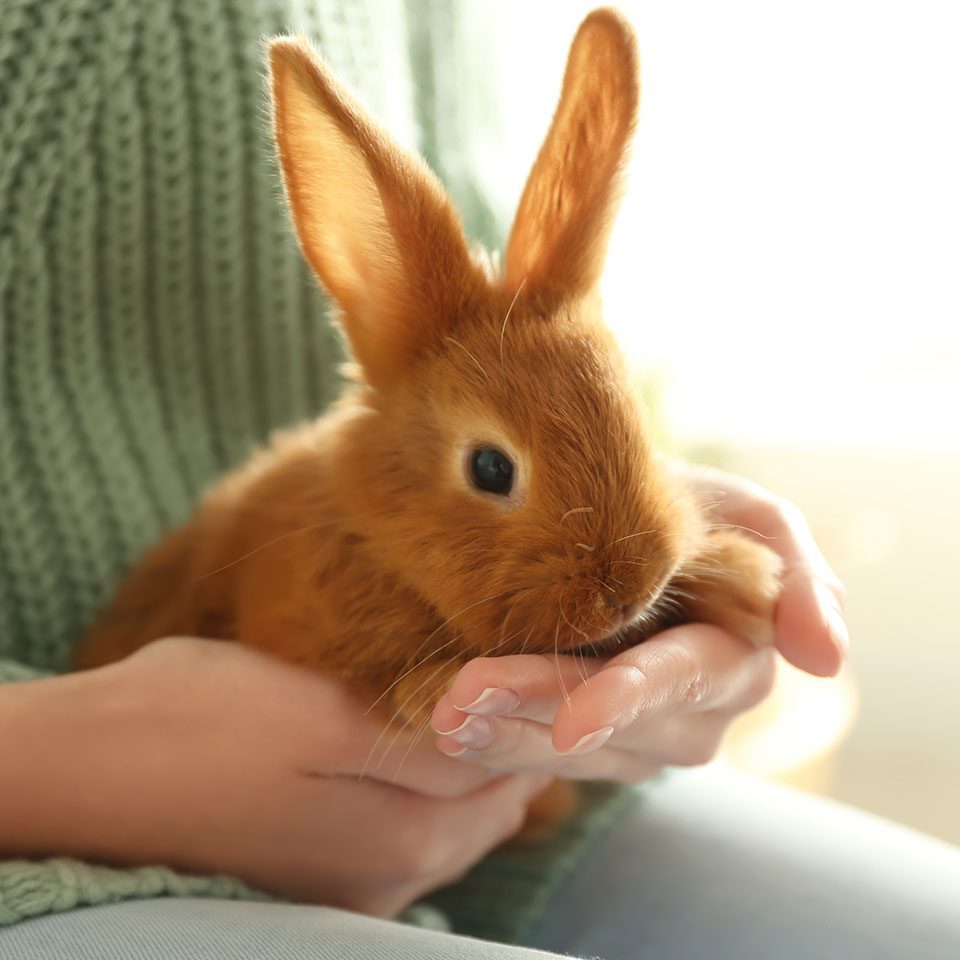
Proper handling is essential for rabbit safety. Always support your rabbit's hind end when you pick them up. Never pick up a rabbit by the legs or ears. Rabbits can seriously injure their spine if they kick while unsupported.
Handle your rabbit often when they are young so they become more comfortable with gentle interaction as they mature. Children under 12 should not handle rabbits without close supervision. A safer option for younger children is to sit on the floor with legs crossed and let the rabbit rest in the child's lap.
Housing
Rabbits are curious and explore by chewing. Many rabbits are injured by chewing electrical cords or other unsafe items. Your rabbit should be securely confined any time you are not actively supervising. Wire cages and exercise pens can work well, but rabbits must always have a solid surface to sit and lie on. Rabbits kept on wire continuously can develop sore hocks, a painful skin condition that can become infected and serious. Keeping the environment clean and dry is also important because prolonged contact with urine can worsen sore hocks.
Bedding and flooring should be rabbit-safe. Line the enclosure with newspaper, shredded paper, or a paper-based bedding from a pet store. Eco-Bedding is an excellent option. Do not use wood shavings of any kind.
Your rabbit will appreciate having a hide box inside the pen. It should have multiple entry and exit holes, be large enough for your rabbit to stretch out underneath, and be sturdy enough to sit on top of for rabbits who like to perch and watch what is happening.
Litter Box Training
Rabbits can be litter box trained. Start in a small space with the litter box placed where your rabbit naturally urinates and defecates. Once they use it reliably, gradually increase the space they can access. If your rabbit has access to multiple rooms, place a litter box in each room.
Rabbit litter boxes are not the same as cat litter boxes. Do not use clumping cat litter. Rabbits generally prefer a shallow rectangular litter box. Use the same paper-based bedding used in the enclosure or a baked paper pellet product such as Yesterday's News.
Rabbits pass many dry, round fecal pellets daily. They also pass a special type of feces called cecotropes at night or in the early morning. Cecotropes are softer, stickier, and darker than regular fecal pellets. They contain nutrients produced by bacterial fermentation, including vitamin B, vitamin K, and proteins, and rabbits eat them to absorb these nutrients.
Overweight rabbits may have trouble reaching and ingesting cecotropes. It is very important to monitor fecal output. Changes in the size or number of fecal pellets, or an accumulation of cecotropes, can be a sign of a medical problem and should be addressed promptly.
Indoor vs Outdoor Housing
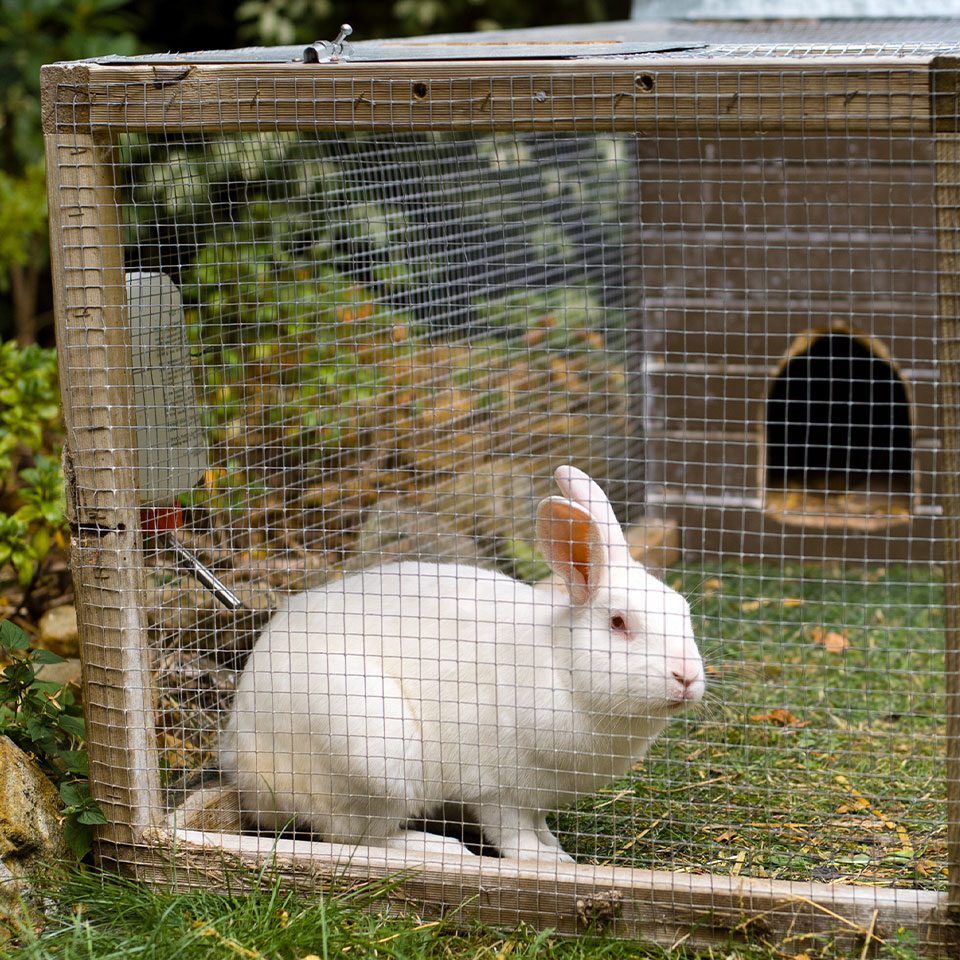
Until recently, it was common to house rabbits outdoors in backyard hutches. This is no longer recommended. What we now understand about domestic rabbit needs points strongly toward indoor housing as a key factor in long-term health and wellbeing.
Outdoor rabbits are at risk from temperature extremes such as heat stroke and frostbite. They are more susceptible to fleas and fly strike, and they are at higher risk from predators. Rabbits allowed to graze outdoors may also pick up intestinal parasites.
Outdoor rabbits are also observed less closely, meaning early signs of illness may be missed until the rabbit is critically ill. Rabbits are social animals. In the wild they live in large warrens and have a strong need for interaction. Outdoor housing can lead to isolation, stress, depression, and illness.
Diet
Fresh water should always be available. A raised sipper bottle or a raised bowl is more sanitary than a bowl on the floor.
In the past, rabbits were commonly fed unlimited pellets. This is not recommended. Pellet-heavy diets are associated with obesity, urinary disease, soft stools, and reduced hay chewing, which can contribute to serious dental disease. Rabbits are designed to eat large amounts of fiber from grasses and vegetation. Pellets are too rich to be the main diet.
Limit your rabbit's intake of pellets to no more than 1/8 cup per 5 pounds of body weight per day. Choose plain timothy-based pellets only. Avoid pellet mixes with seeds, colorful pieces, or “treat” ingredients. Sherwood pellets are a great option. You do not need to feed pellets at all, they are not necessary for good nutrition. We often eliminate pellets for rabbits that are overweight or have teeth issues.
An unlimited amount of fresh, clean, dry timothy hay should be available at all times. Orchard grass or Meadow hay is also an excellent everyday hay. Alfalfa hay is not recommended for rabbits over four months of age because it is higher in calcium and calories.
Offer fresh greens daily. Provide one heaping cup per 5 pounds of body weight of a mixture of at least three greens such as red leaf lettuce, green leaf lettuce, dandelion greens, carrot tops, parsley, romaine, or fresh picked non-chemically treated grass. Vary the greens over time to support a balanced diet. Spinach and kale can be offered sparingly.
Contrary to popular belief, carrots are not a rabbit's best friend. A baby carrot one to two times per week is fine as a treat, but carrots are high in sugar and should not be offered regularly. Wash produce thoroughly and choose organic when possible.
Many pet stores sell rabbit treats such as yogurt drops, dried fruit, seed bars, corn cobs, and mineral blocks. These products may be inappropriate or even dangerous for rabbit digestion. Short-term consequences include gas, diarrhea, and GI stasis. Long-term consequences include obesity, fatty liver disease, and shortened lifespan. Do not waste money on these products. If you must give a treat, offer a small amount of pellets or a tiny piece of fresh fruit or carrot. Many rabbits value gentle head scratches or a fresh salad just as much, if not more.
Exercise
Rabbits need daily exercise. Allow at least 30 minutes of supervised time outside the cage in a safe, contained area.
Remove access to electrical cords and anything that can be chewed or swallowed. Rabits love to bite cords, and this can cause severe injury.
Dental Care
Rabbits are prone to dental disease. The most important preventive step is unlimited access to hay, which helps wear down teeth naturally.
If your rabbit ever stops eating, call immediately. Not eating is an emergency for rabbits.
Check your rabbit's front teeth periodically. Some rabbits have misalignment that causes abnormal overgrowth. If you notice uneven or excessive tooth length, schedule an exam.
Grooming
Rabbits groom themselves extensively. You should never bathe a rabbit. Full immersion in water can cause shock.
If urine or fecal material is stuck on the hind end, spot clean with a gentle, fragrance-free shampoo such as oatmeal shampoo.
Rabbits shed seasonally. Because rabbits cannot vomit, ingesting too much hair can contribute to hairballs and GI stasis. Brush at least once daily during shedding periods. Flea combs and slicker brushes work well.
Rabbit skin is thin and sensitive. Watch for discomfort when brushing and be cautious with firm bristles. For significant mats, schedule a grooming appointment with the veterinary team rather than trying to cut them at home. We see several rabbits every year where owners have unknowingly cut the skin trying to remove a fur matt.
Nail Trims
For nail trims, many owners find it helpful to wrap the rabbit snugly in a towel, leaving one foot out at a time. This can reduce kicking and improve safety.
Nails can be trimmed with human or dog nail clippers. We recommend not trimming nails unless we have shown you how to do it safely. Our team can also trim nails for you if you prefer.
Common Medical Problems
Common issues we see in rabbits include:
- Skin disease, often starting as hair loss, redness, or itchiness. Mites and lice are common causes.
- Abscesses
- Respiratory disease, often showing as sneezing or discharge from the eyes or nose.
- Dental disease, often showing as reduced appetite, drooling, tooth grinding, or difficulty eating.
- Digestive disease, often beginning as decreased appetite, smaller stools, soft stools, or reduced fecal output.
- Bladder Sludge
- Ear problems, often showing as scratching or head shaking.
- Eye problems including conjunctivitis, excessive tearing, blocked tear ducts, cataracts, and corneal ulcers.
- Lameness or dragging legs, which may indicate sprains, bruising, fractures, or spinal problems.
Digestive warning
If your rabbit stops eating or stops producing normal fecal pellets, call immediately! This may indicate ileus or GI stasis. Rabbits can deteriorate quickly and there is no time to wait if eating and stool production change.
Rabbit Hemorrhagic Disease Virus Type 2 (RHDV2)
Why it is important to keep your rabbit indoors!
RHDV2 is a highly contagious and often fatal viral disease that affects domestic and wild rabbits. In many cases, the only signs are sudden death and blood-stained noses due to internal bleeding. Infected rabbits may also develop fever, reduced appetite, and respiratory or nervous system signs.
RHDV2 was detected in a domestic rabbit in New York City in February 2020, with additional isolated cases reported in Connecticut and Pennsylvania. The virus has been reported mainly in the Southwest and has spread across multiple states including New Mexico, Arizona, California, Colorado, Nevada, and Texas. To date, there have been no reported cases in New Hampshire.
RHDV2 is very resistant to extreme temperatures and can be spread through direct contact, exposure to blood or excretions, contaminated food and water, carcasses, and contaminated materials. People can spread the virus indirectly on clothing and shoes.
A vaccine has been developed and is provisionally approved in some states. The vaccine is available in Massachusetts at this time. The vaccine requires two injections the first year followed by yearly vaccination.
In addition to vaccination, biosecurity is essential. Limit exposure to other rabbits, domestic or wild, and avoid shared items such as bowls, toys, and litter boxes. Wash produce thoroughly, provide clean water, and source hay from suppliers without a current outbreak.
If you suspect RHD in a domestic rabbit, notify your veterinarian immediately. Do not bring your rabbit into the clinic unless instructed. If you suspect RHD in a wild rabbit, notify your veterinarian and state wildlife officials.
Preventive Care
We strongly recommend a yearly wellness exam for rabbits. Rabbits often hide illness until they are very sick. Routine exams help identify problems earlier when treatment is more likely to be successful. This is a core goal of preventive care.
At yearly visits we record weight, examine teeth, eyes, and ears, listen to heart and lungs, palpate the abdomen, and assess overall condition. These exams often identify problems before they become advanced. We also review any updates in rabbit care and prevention. We also recommend a yearly fecal for rabbits and sometimes bloodwork if indicated.
Additional Resources
The House Rabbit Society is a helpful educational resource for rabbit owners.