
Physical Characteristics
Male sugar gliders typically weigh between 100 and 160 grams, while adult females usually weigh 80 to 130 grams. Weight varies among individuals and subspecies.
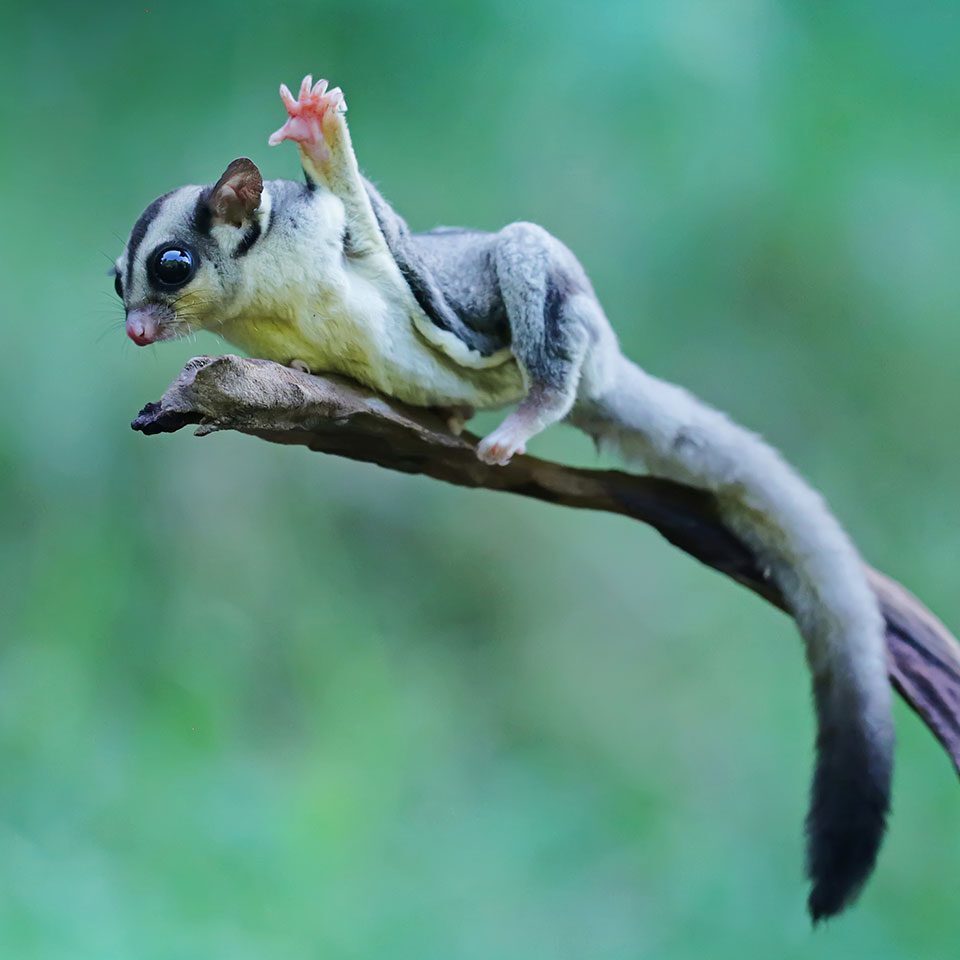
Sugar gliders can glide up to 165 feet (50 meters) using a membrane that stretches between their front and hind legs. Both males and females have large eyes adapted for nighttime activity.
Males have a frontal scent gland located on the top of the head, used for territorial marking and recognition of group members. In adult males, the hair around this gland is often sparse or absent.
Male sugar gliders also have a long pendulous scrotum and a forked (bifid) penis. Neutering male sugar gliders is strongly recommended, especially if they are housed with other gliders of either sex. Intact males are more prone to aggression and self-mutilation. Neutering is typically straightforward when performed by a veterinarian experienced with exotic pets and may be done at any age as long as the testicles or “pompom” is present.
Female sugar gliders have a pouch containing four teats. The gestation period is approximately 15–17 days. Females usually give birth to one or two joeys at a time. After birth, joeys migrate to the pouch and remain there for 70–74 days before permanently leaving the pouch.
Sugar gliders are best acquired at approximately 8–12 weeks after emerging from the pouch. This is the ideal time for socialization with humans. Full socialization may take many weeks and requires patience and consistent interaction.
Housing
A sugar glider enclosure should measure at least 20 × 20 × 30 inches high, which is adequate for one to two sugar gliders. Taller cages are preferred, as sugar gliders love to climb. Commercial bird cages often work well as long as the bar spacing is no wider than ½ inch. The Midwest Critter Nation cage is a commonly recommended option.
Place the enclosure in an area with access to natural daylight but not in direct sunlight. Ambient temperature should be maintained between 65°F and 75°F.
Sugar gliders are nocturnal and require an enclosed sleeping area. Wooden birdhouses with an entrance hole no smaller than 1½ inches, fleece or cloth sleeping pouches, or hanging hammocks work well. Bedding is generally not necessary, but non-toxic recycled paper may be used. Avoid cedar or pine shavings.
The enclosure should include climbing branches, perches, ladders, swings, and bird-safe toys. Use only non-toxic woods safe for birds. Remove and replace wooden items once they become heavily soiled. Avoid toys with small removable parts that could be swallowed.
Sugar gliders also enjoy solid exercise wheels designed without bars.
Cages should be cleaned weekly with soap and water. Sleeping pouches and fabric items should be washed every 3–7 days. If the cage smells, it needs cleaning.
Diet
The sugar glider diet is highly specialized and difficult to replicate in captivity. In the past, sugar gliders frequently developed nutritional deficiencies due to improper diets. An ideal captive diet continues to be investigated.
Websites with reliable current information include: www.glidercentral.net and www.sugarglider.com
Current recommendations by exotic animal veterinarians include the following components:
- High-quality pellets formulated for sugar gliders such as Nutrimax or Glider Chow
- Blenderized diet, one ice-cube portion per glider nightly
- One teaspoon per glider of chopped fresh fruits nightly
- A few insects such as mealworms per week
All insects should be gut-loaded and dusted with Rep-Cal calcium supplement. Wax worms are fattening and should not be fed regularly. Do not feed lightning bugs.
Careful selection of fruits and vegetables is essential. The goal is a calcium-to-phosphorus ratio of approximately 2:1. Do not feed pits, seeds, or skins when pesticide exposure is a concern. Avoid grapes and raisins, as their effect on sugar glider kidneys is not well understood.
Appropriate fruits and vegetables include apple, papaya, orange, banana, strawberry, cantaloupe, mango, kiwi, peach, honeydew melon, cucumber, squash, bell pepper, carrot, sweet potato, and peas. Rotate selections regularly, as preferences may change.
Several blenderized diets are recommended, including the BML diet (Bourbon's Modified Leadbeater's Diet) and the HPW diet (High Protein Wombaroo). The following recipe is a modified BML diet recommended by our hospital.
Blenderized Diet Recipe
Use multiple substrate types layered together:
- ¼ cup organic apple juice
- ½ cup organic honey
- 1 organic hard-boiled egg, shell removed
- 4 ounces plain organic yogurt
- 1 teaspoon Rep-Cal Herpivite vitamin supplement (blue label)
- 2 teaspoons Rep-Cal calcium supplement with vitamin D3 (pink label)
- 2 jars chicken baby food
- ¼ cup wheat germ
- ½ cup dry baby cereal (mixed or oatmeal)
- ¼ cup Oxbow Carnivore Care or crushed pelleted diet
Blend until smooth. Pour into ice cube trays, freeze, and feed one cube per glider nightly. Thaw before offering in a shallow dish. If a sugar glider will not eat independently, syringe feeding may be necessary.
For enrichment and treats, acacia gum may be placed into small drilled holes in branches or toys and offered three to four times per week. Nectar supplements formulated specifically for sugar gliders are another acceptable treat option. Treats should be offered sparingly to avoid obesity.
Fresh water should be available at all times in a clean bowl or bottle. Food and water dishes must be washed daily, as sugar gliders are sensitive to bacterial contamination.
Behavior
Sugar gliders are highly social, intelligent animals that require daily interaction and bonding. They are playful and thrive on companionship.
To socialize them properly, plan to spend one to two hours per day handling your sugar gliders, ideally in the evening when they are naturally active.
If your schedule does not allow for consistent daily interaction, it is strongly recommended to keep more than one sugar glider. Social isolation can lead to depression, illness, and self-mutilation. Some owners enjoy carrying bonded sugar gliders in secure sweatshirt pockets during quiet activities.
Common Medical Problems
Metabolic bone disease and hind limb paralysis caused by calcium deficiency and improper calcium-to-phosphorus balance are among the most common conditions seen in sugar gliders, especially juveniles. Signs include weakness, tremors, poor coordination, fractures, weight loss, and decreased appetite. Spinal fractures may result in paralysis. Early diagnosis is critical, and some deformities may be permanent.
Trauma may occur due to cage mate aggression, improper handling, or predation by dogs or cats. Sugar gliders can also become trapped in furniture or household spaces. Supervision during out-of-cage time is essential.
Self-mutilation is relatively common and may occur due to stress, injury, or postoperative discomfort. It is more frequently seen in intact males.
Parasites, particularly protozoa, are common. Routine fecal testing is recommended.
Dental disease occurs frequently, especially in older sugar gliders or those fed soft, sugary diets. Signs include drooling, difficulty eating, foul odor, swelling, and tooth loss. Veterinary dental care is often required.
Other conditions seen in sugar gliders include cataracts, heart disease, obesity, and cancer.
Signs of Illness
Contact us promptly if you observe any of the following:
- Sneezing
- Nasal or ocular discharge
- Itching
- Decreased appetite
- Hair loss
- Diarrhea
- Self-mutilation
- Weakness or lethargy
- Lumps or swellings
Sugar gliders can decline rapidly. Ill animals should be examined as soon as possible.
Preventive Care
Sugar gliders should receive an annual veterinary examination. Because signs of illness are often subtle, routine wellness visits are essential. Annual fecal testing is recommended to screen for intestinal parasites.
If your sugar glider shows signs of illness, veterinary evaluation should occur within 12 hours. These animals are small and can deteriorate quickly.
For additional information and supplies, the following resources may be helpful:
- Exotic Nutrition - Pet Supplies
- Chicago Exotics Animal Hospital - Sugar Glider Care